From the Baltzell Opera House to a Downtown Hammond Landmark
Ritz Theatre — Downtown Hammond, Louisiana
Located on South Cypress Street in downtown Hammond, the historic Ritz Theatre is a reminder of a time when going downtown for a show or movie was an important part of community life. Although the building is no longer a movie theater, its long history reflects several different eras of entertainment in Hammond.
The Baltzell Opera House
The story of the Ritz begins in the early 1900s, when the building opened as the Baltzell Opera House. The Hammond Historic District dates the opening to 1905. At the time, downtown Hammond was becoming an important destination for visitors from New Orleans, including families who spent summers in Hammond to escape the heat and humidity of the city.
The Baltzell provided those visitors—and local residents—with a place to enjoy live entertainment. After dinner, families could walk through downtown to attend a performance at the opera house.
The building was part of a larger downtown entertainment and commercial area that included the nearby Saik Hotel and what became known as the Baltzell Block.
From Live Entertainment to Movies
As motion pictures became increasingly popular, the building’s role in Hammond’s entertainment scene changed.
The arrival of talking pictures transformed movie theaters across America. The Jazz Singer, released in 1927, helped usher in the era of synchronized sound, and Hammond’s theaters became part of this rapidly changing entertainment industry.
By the 1940s, the building had undergone changes that prepared it for its next chapter. In 1945, the former Baltzell Opera House reopened as the Ritz Theatre.
1968, renamed Ritz Cinema with 684 seats, and a one-screen theater. It continued showing movies into the 1970s before eventually closing.
For generations of Hammond residents, the Ritz became a neighborhood movie theater where families could enjoy an evening or weekend movie without traveling outside the city. The Hammond Historic District recalls movie tickets costing less than a dollar, with romantic films appearing on Friday nights and westerns attracting audiences on Saturday afternoons.
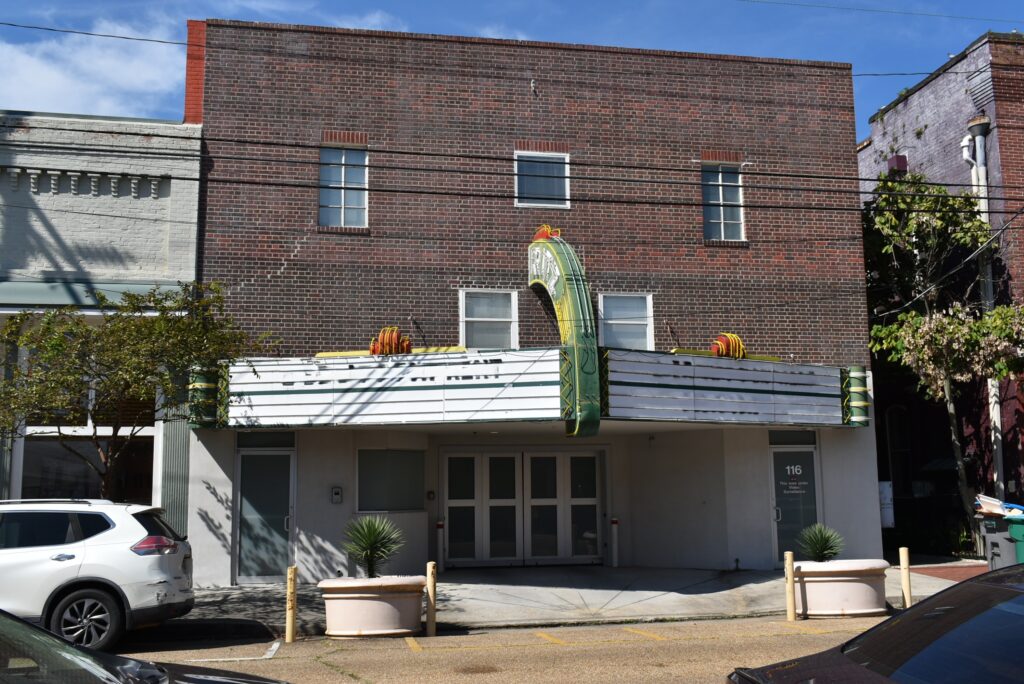
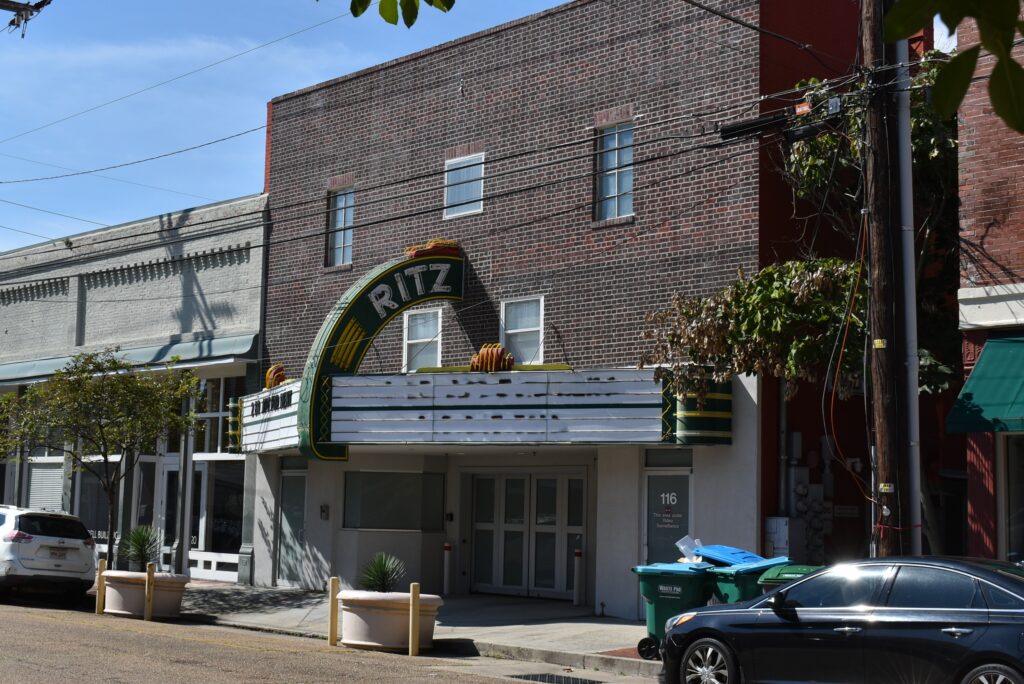
The building’s theater appearance also became an important part of the downtown streetscape. National Register documentation describes the Ritz as a contributing building in the Hammond Historic District, noting its distinctive marquee and early-1940s appearance.
The End of the Movie-Theater Era
Like many traditional downtown movie theaters, the Ritz eventually faced changing economic conditions and competition from newer theaters.
The theater closed during the later decades of the 20th century. The rise of suburban and multiplex movie theaters made it increasingly difficult for older single-screen downtown theaters to compete.
After the Ritz closed, the building spent years with little activity. It was used at times as a warehouse and remained largely vacant for an extended period. According to the Hammond Historic District, the building stood vacant or was used as a warehouse for almost three decades.
Saving the Historic Building
By the time plans were made to give the old building a new purpose, years of deterioration had taken their toll.
Rather than demolishing the structure, developers chose an adaptive reuse approach—preserving important portions of the historic building while transforming the interior for a completely different use.
The project was completed in 2007, converting the former theater into townhouse-style residential spaces.
Architectural documentation from Holly & Smith Architects describes the project as the adaptive reuse of a historic 1905 theater that had been abandoned and was in serious disrepair. Because of years of decay and water damage, the exterior shell was the principal historic element that could be preserved.
The renovation incorporated a parking garage at ground level with residential townhouse units above. Seven townhouse units were created within the building.
Perhaps most interestingly, portions of the original structure—including its distinctive steel trusses—were retained and incorporated into the new residential interiors.
The Ritz Marquee Lives On
One of the most recognizable features of the old theater remains its marquee.
The marquee seen today is not the original theater marquee, but it was reconstructed based on the original design, helping preserve the building’s historic identity and its connection to Hammond’s movie-theater past.
For people who remember the Ritz as a movie theater, the familiar name and marquee provide a visible connection to an earlier downtown Hammond.
A Piece of Hammond’s Entertainment History
Today, the former Ritz Theatre is no longer showing movies. Its conversion to residential use represents a different chapter in the building’s long history.
Yet the structure remains an important part of the Hammond Historic District. It represents several generations of entertainment—from the days of the Baltzell Opera House and live performances, through the golden age of neighborhood movie theaters, and finally to its preservation through adaptive reuse.
The Ritz is also a reminder of how dramatically downtown Hammond has changed. The same streets that once brought families to an opera, a live performance, or a Saturday afternoon western are now home to restaurants, businesses, apartments, and other historic buildings that continue to give downtown its character.
The former Ritz Theatre may no longer be a place where Hammond residents go to watch a movie, but the building itself remains part of the story.