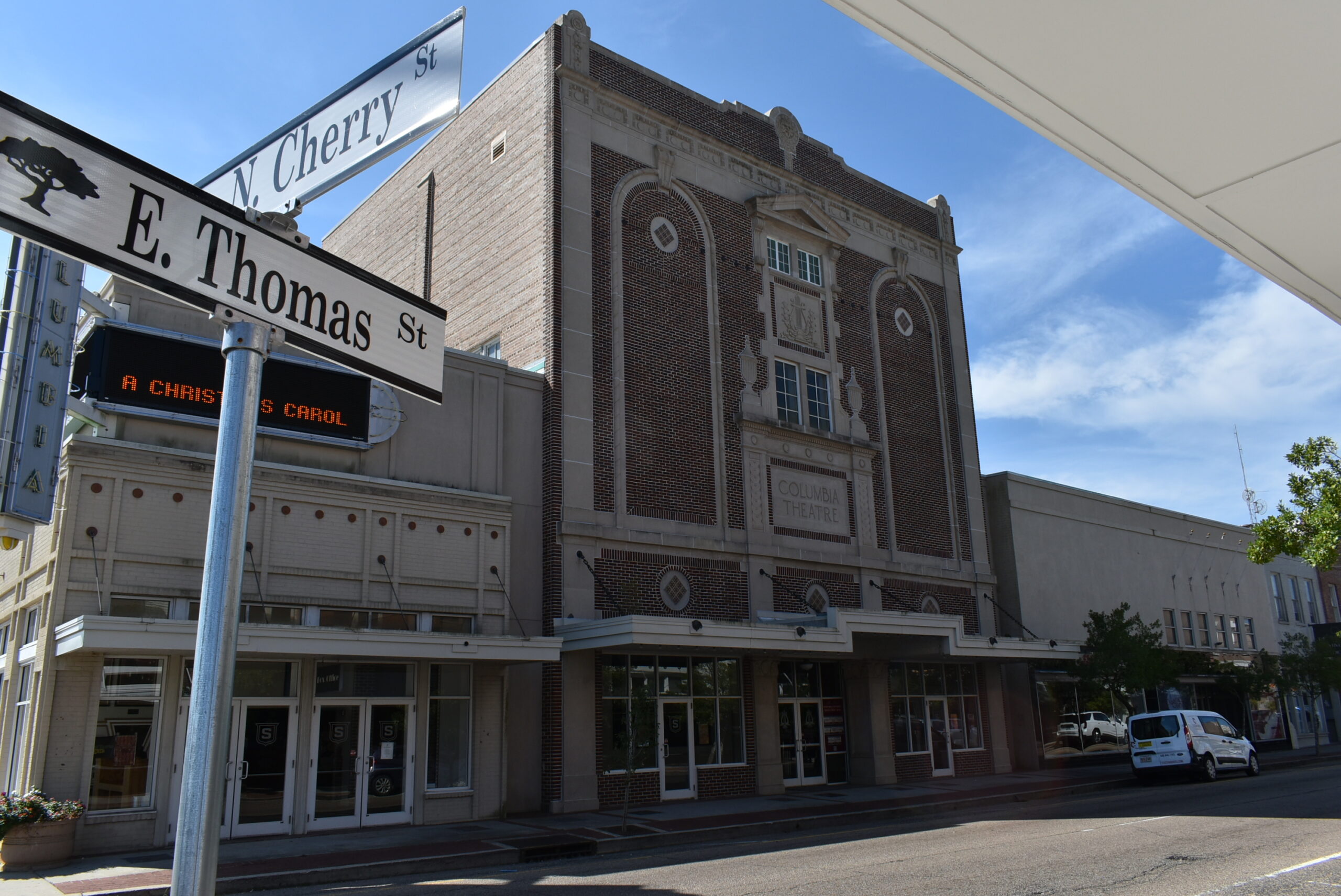
The Columbia Theatre
The theater itself was impressive.
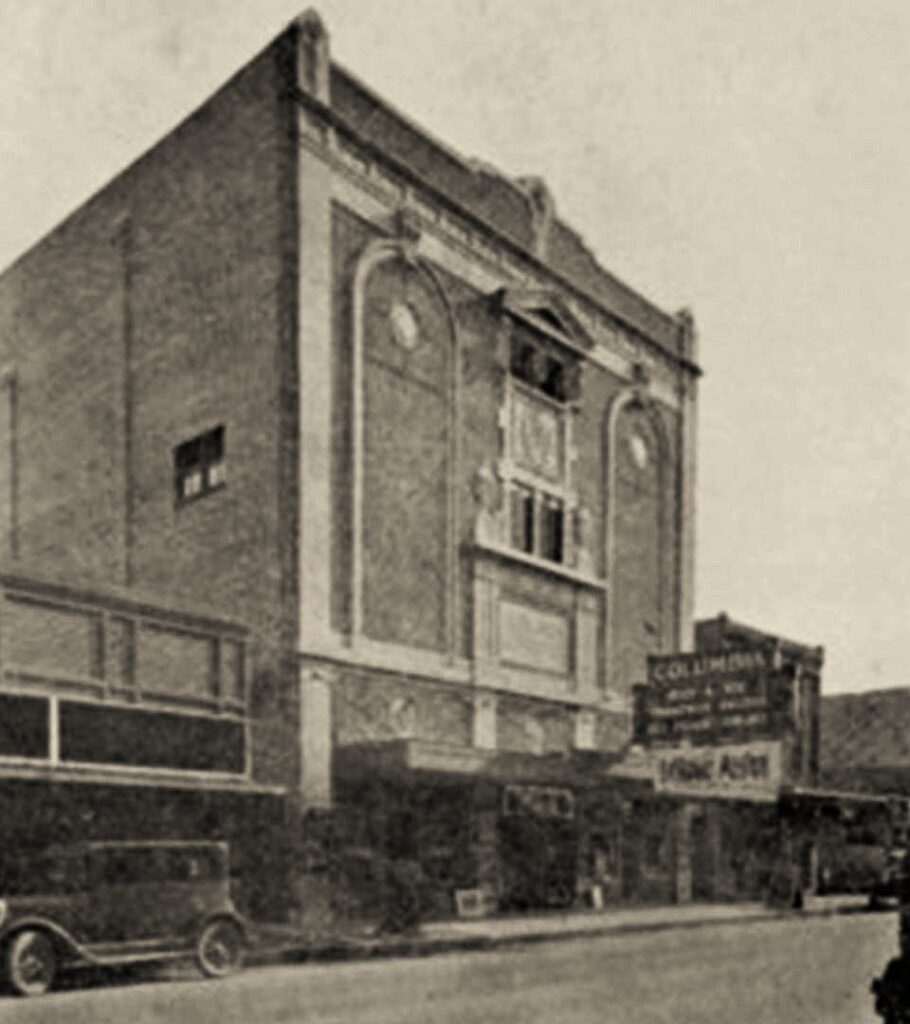
The Columbia opened in 1928, at the corner of East Thomas and South Cherry Streets, during a time when movie palaces were designed to make going to the movies an event in itself.
When it opened, the Columbia had approximately 1,200 seats, a large stage, a Robert Morton Wonder Organ and an early air-conditioning system. It was promoted as one of the most elaborate movie palaces between New Orleans and Baton Rouge.
Its opening was a major event in Hammond. The first attraction was the silent film The Cardboard Lover, and live entertainment and music accompanied the movie. After the performance, crowds spilled into East Thomas Street, where the celebration continued.
The Columbia was designed for more than movies. Its stage could accommodate vaudeville, theatrical productions and traveling shows, making it one of Hammond’s important entertainment centers.
For decades, the theater was part of everyday life in downtown Hammond.
The Changing Face of Downtown Hammond
The Columbia’s story eventually followed the same path as many downtown theaters across America.
Television changed the way people spent their leisure time. Later, shopping centers and multiplex theaters offered newer facilities and more screens.
Downtown Hammond also changed.
The Columbia struggled to compete with the changing entertainment business and eventually closed in 1972, 44 years after opening.
There was an attempt to give the building another life in the late 1970s, but the effort did not last. During the 1980s, the theater became vacant and deteriorated. By the early 1990s, the historic building was in serious danger of being demolished.
That could have been the end of the story.
Fortunately, it wasn’t.
Saving the Columbia
During the early 1990s, local preservation advocates recognized that the old theater could become an important part of the revitalization of downtown Hammond.
Marguerite Walter of the Hammond Downtown Development District and Harriet Vogt of Southeastern Louisiana University’s Fanfare program became important figures in the effort to save the building.
A professional assessment recommended preserving the theater—and doing it quickly because the building’s roof was badly deteriorated.
The preservation effort eventually brought together the Hammond Downtown Development District, the City of Hammond and Southeastern Louisiana University.
In 1994, First Guaranty Bank donated the theater to the Downtown Development District, and architects began developing plans for its restoration. The project ultimately secured approximately $4.9 million in state capital-outlay and federal grant funding. Adjacent buildings were also acquired to provide space for dressing rooms, rehearsal areas, offices and other facilities needed to operate a modern performing-arts center.
The goal wasn’t simply to save an old building.
It was to give the Columbia a new purpose.
The Columbia Comes Back
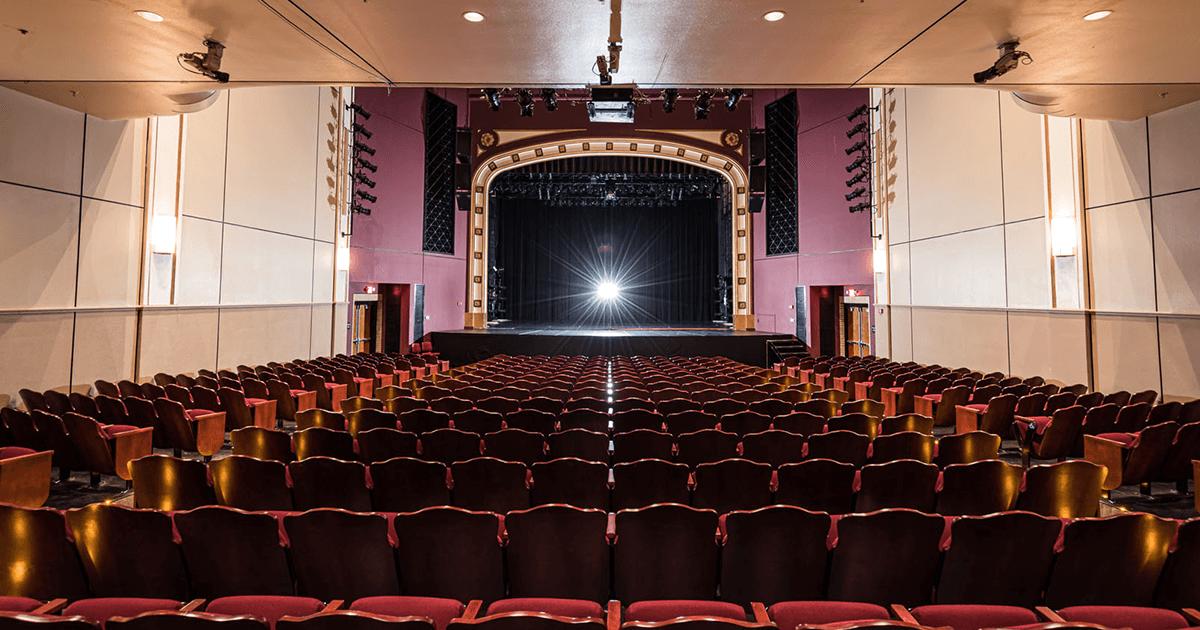
After years of being closed and threatened with demolition, the Columbia Theatre reopened in January 2002 as the Columbia Theatre for the Performing Arts.
The restored theater became part of Southeastern Louisiana University and returned to its original role as a place for entertainment and community events—although the entertainment had changed considerably since the days of Saturday movie matinees.
Today, the theater hosts concerts, plays, musicals, dance performances, films, special events and other productions. The main performance hall, Hainkel Hall, seats approximately 830 people.
The restored building also preserves many of the architectural features that made the original Columbia such an important downtown landmark. Its brick façade, limestone ornamentation, large arches and distinctive marquee continue to make it one of the most recognizable buildings in downtown Hammond.
More Than a Building
The history of the Columbia Theatre can be told through dates:
1928 — The Columbia opens as a grand movie palace.
1930s–1940s — It becomes an important center of entertainment during the Depression and World War II years.
1950s–1960s — Television, changing shopping patterns and new theaters begin to affect attendance.
1972 — The Columbia closes.
1980s — The vacant theater deteriorates and faces an uncertain future.
1990s — Local preservationists, the City of Hammond, the Downtown Development District and Southeastern Louisiana University work to save it.
2002 — The restored Columbia Theatre reopens as a performing-arts center.
Also See: Hammond Historic District